About the novel
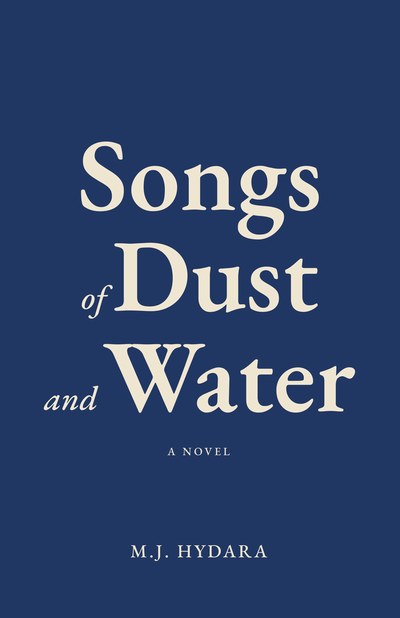
Published in October 2026, in paperback and on Kindle. The paperback has 244 pages.
On this page
The story
Part One: The Glass House of the Sahel
Talib is a weaver’s son in Madina, a village in the dry north of the Republic of Awdagha. His father expects him to carry on at the loom, but Talib has taught himself how machines work and wants a different life. After three bad harvests in a row, the family needs all the money he can bring in.
His sister Hawa is training to be a nurse in Bakoro, the capital, and her exam fee is due. So when building starts on a solar plant that will bring the village power and pump water to its fields, Talib takes a job there. His wages pay the fee, and the work lets him do what he has always wanted. But it takes him away from the loom, and his father says little about it.
A foreign fund, the Proxima Fund, is paying for the plant. Its engineer, Adam Sterling, has designed it to run itself, and he has promised Minister Khresay, in the capital, that it will need no work from the village. When a part snaps on the second day of building and Malik, the village smith, mends it in his forge, Adam won’t use it. He has no way to test the mended steel. Talib admires Adam, but the plant he is helping to build is not Madina’s to run.
Khresay sends an engineer of his own, Aisha, to keep an eye on the work. She has already been moved from an earlier post for reporting salt in a contractor’s concrete. She soon sees that the dust is wearing the machines down, but Adam trusts the figures from his own laboratory.
One night Madina’s new lamps are burning while half of Bakoro has no power. Dunia, the Minister of Energy, runs a national fund with nothing left in it, and the President wants results. To Dunia, every foreign project is an island with its own flag. The foreigners build it, photograph it and fly home, and when it breaks, her Ministry is left with the wreck. She wants the plant’s money where the state can reach it.
Part Two: The Water-Keeper
Ten years later, the story moves six hundred kilometres south, across the border into the Republic of Tekuru, to a village called Nafawol. Kadiatou is the village’s Water-Keeper. For six years the well has been drying up, and the little water left in it is turning salty. Every morning she hands out water she knows is making the children ill, her granddaughter Mariam among them. There is no other water.
Dr Arramata, an engineer who grew up in Nafawol, comes home with a plan for a machine that draws water from the air. The Proxima Fund will pay for it, but under a new rule: the village must own what is built.
When the visitors sit down with the elders, Kadiatou sets a bowl of the well water in front of them, as a good host does. Then she tells them to stop promising and show her what the machine can do.
Nafawol needs the water, but it also wants to know who will run the machine, who will check the money and what happens when the Fund leaves. Kadiatou, her friend Fatou, old Mamadou and the younger villagers take nothing on trust, and they argue each point out in the open.
“A thing you are not allowed to mend is not yours.”
What the book is about
Kadiatou and Fatou
The two women have known each other since Fatou was a girl selling groundnuts. Now she is a trader with two hired lorries, and she knows what a bad deal costs a family. Even before the new machine arrives, Kadiatou worries about who will hold its key.
They trust each other, though they often disagree about what the village should do.
A daughter who comes home
For eleven years Dr Arramata has been measuring the water under the floodplain, and she has published warnings about what its salt would do to the children. Nothing has come of it. Now she has a fund behind her, and the village listens to her, because she is one of its own, born four hundred paces from the well. Agreeing with her is another matter. When an elder speaks, she still lowers her eyes.
Promises on paper
Nafawol has heard promises before, from surveyors who came and went, and from ministries in the capital that never kept them. So when the new agreement arrives, Fatou reads every line of it aloud herself, because whenever a buyer at the port read his papers to her, he left out a line. Ten years earlier, in Madina, the Ministry registered one elder to sign for everyone, and the papers were not read aloud to the village first.
Work that goes uncounted
In Nafawol the women draw the water, run their own savings group and cook for every work crew. Isatou, who leads them, wants the food and the hours they give the crews written down and counted, the same as the men’s work.
Who may mend it
Malik mends what others would throw away, but on the new plant only certified workers may do repairs. In Part Two, the agreement Nafawol signs with the Fund lets the village build, mend and copy the new machine from its drawings. A short essay follows the question from one village to the other: Who has the right to repair it?
Wagadu, the old empire
Kadiatou grew up on her grandmother’s story of Wagadu. In the story, the empire’s wells fail and its families walk south to find water. Now Nafawol’s well is failing.
Read the story her grandmother told: Wagadu and the snake in the well.
Map
A rough sketch, not to scale. Madina is six hundred kilometres north of Nafawol. Port Walada is on the coast, less than a day’s drive from Nafawol. Sirawol and Talawol are, Talawol and Kumbawol are Nafawol’s neighbours. You can see who lives where on the Characters and words page.
An old-style sketch map, with north at the top. Furthest north is Wagadu, the old empire in the grandmothers’ stories. Its families followed the water south. In Awdagha, Madina lies in the dry north, with a crossroads below it where lorries stop. Bakoro, the capital, is a night’s bus ride to the south. Then comes the border. Nafawol lies far to the south, in Tekuru, on an old floodplain beside a dry riverbed. Close around it are other river villages, among them Sirawol, Kumbawol with its rice, and Talawol with its market. A river winds down to the sea, and a track runs south from Nafawol to Port Walada, Tekuru’s capital on the coast. The villages are drawn as walled compounds of cement-block houses with shade trees, and the two capitals as clusters of buildings, with a crane at the port. Along the way are fields, goats, a lorry at the crossroads, the night bus, a donkey cart, a lorry at the Talawol market, a baobab, acacias and a boat on the sea.
More about the book
Read the openings
The first pages of each part: Talib at the loom in Madina, and Kadiatou at the well in Nafawol.
Moments from the book
Four short scenes from the early chapters, and the choice facing Adam, the foreign engineer, in chapter 2.
Questions and answers
Short answers before you start: what the book is about, who wrote it and why, and where to buy it.
Who has the right to repair it?
A short essay on whether you really own something you aren’t allowed to mend.
A reader’s companion
A note on each chapter to read as you go, plus the characters, the places and how the money and the water work.
Words explained on this page (3)
Sahel
The dry belt of land south of the Sahara, from the Atlantic to the Red Sea.
Sarahule
A language and culture of the region, called Soninke in Awdagha. Kadiatou and Ousman speak it, and the Sarahule characters trace their history to Wagadu.
Wagadu
An old empire of the region, rich from the trade that crossed its land. The Sarahule characters trace their history to it, and other characters keep their own memories of where their families began. The four losses that Balla recites draw on the parts of the Dausi, the Sarahule epic of Wagadu, that Leo Frobenius recorded in 1909 and published in 1921.